Zuojiang Huashan Rock Art Cultural Landscape
Introduction
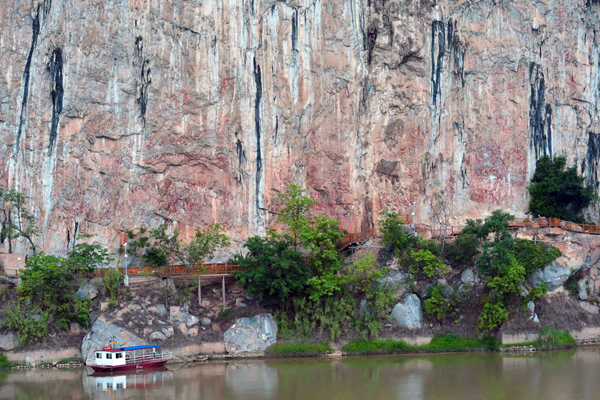
The Zuojiang Huashan Rock Art Cultural Landscape is an extraordinary collection of historical rock art located on the bank of the Zuojiang River and Mingjiang River in southwest China. This remarkable site spans an area of approximately 6,621 hectares, encompassing three key heritage areas in Ningming, Longzhou, and Fusui towns. The rock art is painted on limestone cliff faces and dates from the 5th Century BC to the 2nd Century AD. These artworks represent the cultural expressions of the Luoyue people, ancestors of the Zhuang ethnic group, and are spread across 38 sites along the steep cliffs of the Zuojiang River and Mingjiang River. This cultural landscape is not only a testament to the artistic capabilities of ancient societies but also provides insight into the life, rituals, and beliefs of the people who inhabited the region over two millennia ago.
The Zuojiang Huashan Rock Art Cultural Landscape was recognized as a World Cultural Heritage Site by UNESCO in 2016. The rock art consists of approximately 4,050 painted images, featuring human figures, animals, and other motifs that illustrate the life and rituals of the Luoyue people. These images are typically monochromatic and created using a red pigment made of hematite mixed with animal glue, enabling them to withstand the test of time and remain vibrant today.
History
The history of the Zuojiang Huashan Rock Art Cultural Landscape is deeply intertwined with the cultural and social dynamics of the Luoyue people. This period spans the Warring States Period (475-221 BC) through to the Eastern Han Dynasty (25-220 AD), reflecting a approximately 700-year historical continuum. The Luoyue people, the creators of this rock art, were an integral part of the socio-cultural landscape of southern China during this era. The rock art they produced is considered to be the most extensive single-panel rock art in the world, other than the Nazca Lines in Peru.
The origins of rock art in this region are traced back to the Luoyue people's profound connection with their environment and their spiritual practices. The images, spread over an expansive 8,000 square meters on the cliff face, depict scenes that are believed to be associated with the bronze drum culture, a significant cultural phenomenon that was widespread across southern China. Bronze drums, depicted in the murals, were not merely musical instruments but symbols of power and spiritual significance, and their presence in rock art signifies their importance in the ceremonial life of the Luoyue people.
Despite their historical longevity, the precise methods used by the Luoyue people to create these images remain a subject of intrigue and exploration. The motifs are painted at considerable heights above the river, with some reaching up to 130 meters, posing questions about the techniques and tools employed by the artists. The pigments used have also withstood the ravages of time remarkably well, indicating the use of sophisticated methods to ensure their durability.
Cultural Significance
The Zuojiang Huashan Rock Art Cultural Landscape holds immense cultural significance as it offers a glimpse into the spiritual and ritualistic practices of the Luoyue people. The motifs frequently exhibit human figures in squatting postures, a common theme in prehistoric art worldwide, often interpreted as a sign of reverence or spiritual devotion. In the context of Zuojiang, these figures might symbolize the worship of a "frog deity," a practice associated with fertility and virility, which was prevalent among communities involved in rice cultivation and other agricultural pursuits.
The rock art also vividly portrays scenes of ceremonial activities, with figures depicted engaging in rituals involving bronze drums, which are still revered today as symbols of cultural heritage and power. The presence of these drums in the murals underscores their central role in the social and religious life of the Luoyue people. Other motifs include depictions of warfare, agriculture, and family life, presenting a comprehensive narrative of the community's everyday existence and their interaction with the natural and spiritual worlds.
The cultural landscape represents a living tradition, as local communities continue to revere the painted mountains, performing rituals and sacrifices believed to appease the spiritual forces associated with the site. This ongoing connection between the past and present adds another layer of significance to the site, making it a dynamic repository of cultural memory and identity.








